
A planting bed can be ready for winter while the trees above it are still dropping leaves. The right fall cleanup plan depends on your property, the work that needs attention now, and how tidy you want the yard between visits.
Choose the timing around the property—not a fixed calendar date. For some St. Clair County homes, one well-timed cleanup is enough. Others benefit from bed preparation first and a later leaf pickup.
One visit or two? Start here.
One comprehensive cleanup
Best fit: The main leaf drop is largely finished, accumulation is manageable, and you are comfortable waiting for the agreed bed work.
Benefit and result: One coordinated visit leaves the specified beds, lawn areas, and walking surfaces tidied to the agreed scope. Trade-off: The property stays untidy longer while you wait, and late leaves may still fall or blow in afterward.
Initial cleanup plus a return visit
Best fit: Beds need attention sooner, trees shed at different times, or a large leaf load makes waiting impractical.
Benefit and result: The first visit puts the agreed beds in order; a later visit addresses new leaf accumulation in the specified areas. Trade-off: A return requires additional time and cost, and leaves can still arrive after it.
A second visit is separately quoted unless expressly included in your written estimate.
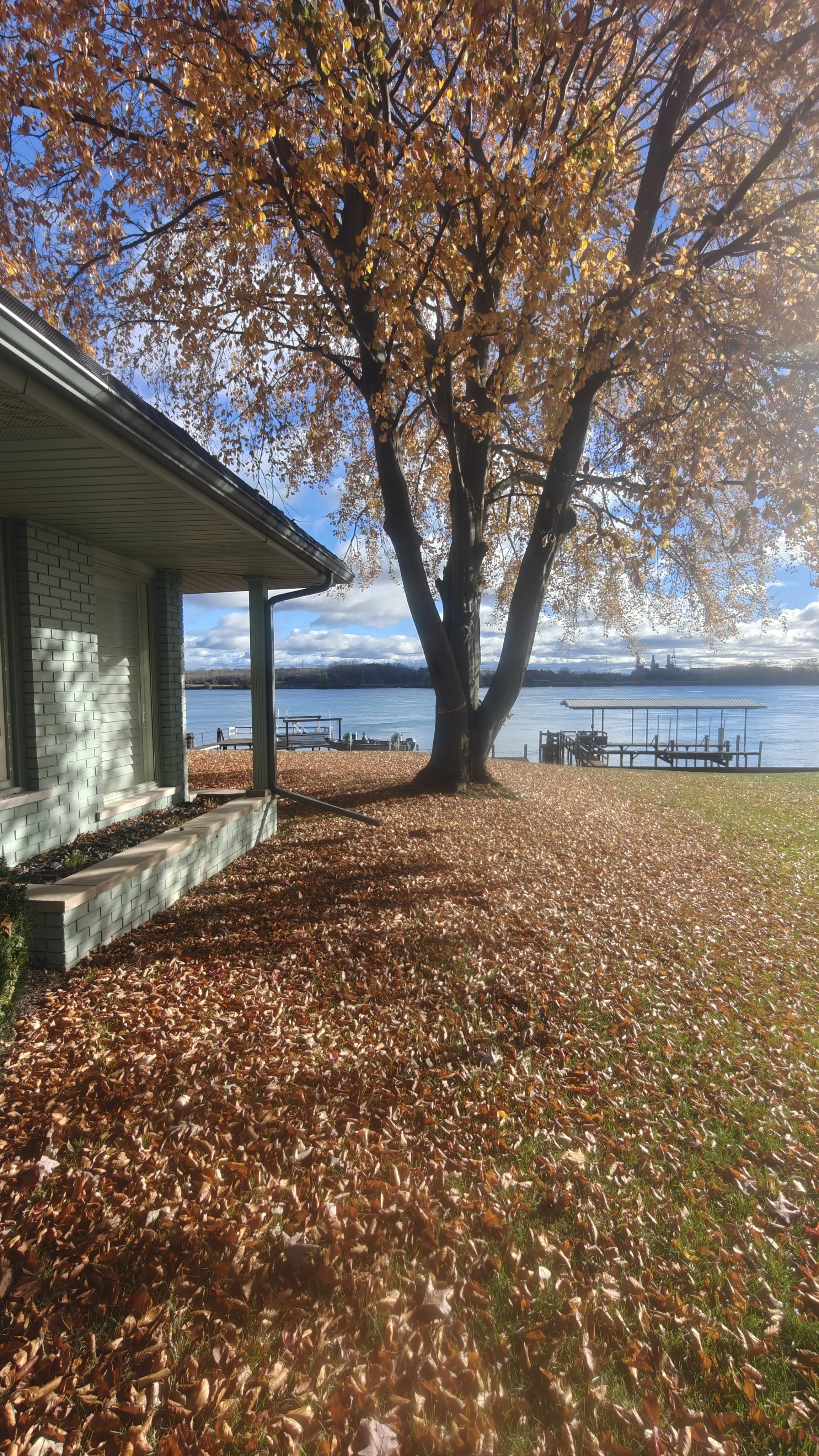
Leaves cover this East China Township lawn while the tree still holds autumn foliage. The final pickup depends on more than the calendar.
Why bed preparation and leaf pickup may need different timing
Bed work and leaf removal solve different problems. Spent annuals, weeds, and selected perennial growth may need attention while a tree still holds much of its canopy. Waiting for every leaf can leave detailed bed work competing with wet conditions or an early snowfall.
Across St. Clair, Marysville, and Marine City, even nearby yards can need different schedules. Tree cover, wind exposure, planting density, and your priorities matter more than the town name or a date on the calendar.
Visit one: prepare the agreed landscape beds
An initial GGL cleanup can include the following when listed in your estimate:
Remove spent annuals and perform appropriate, plant-specific seasonal cutbacks.
Hand-weed and detail the agreed planting beds.
Blow out or carefully gather early leaves and loose debris from the specified areas.
Collect, load, haul, and dispose of the debris included in that visit.
The visible result: Beds look cared for, unwanted growth and agreed debris are removed, and the plants or habitat areas you want retained remain in place. This is not a promise that every plant will be cut down or every leaf removed from the property.
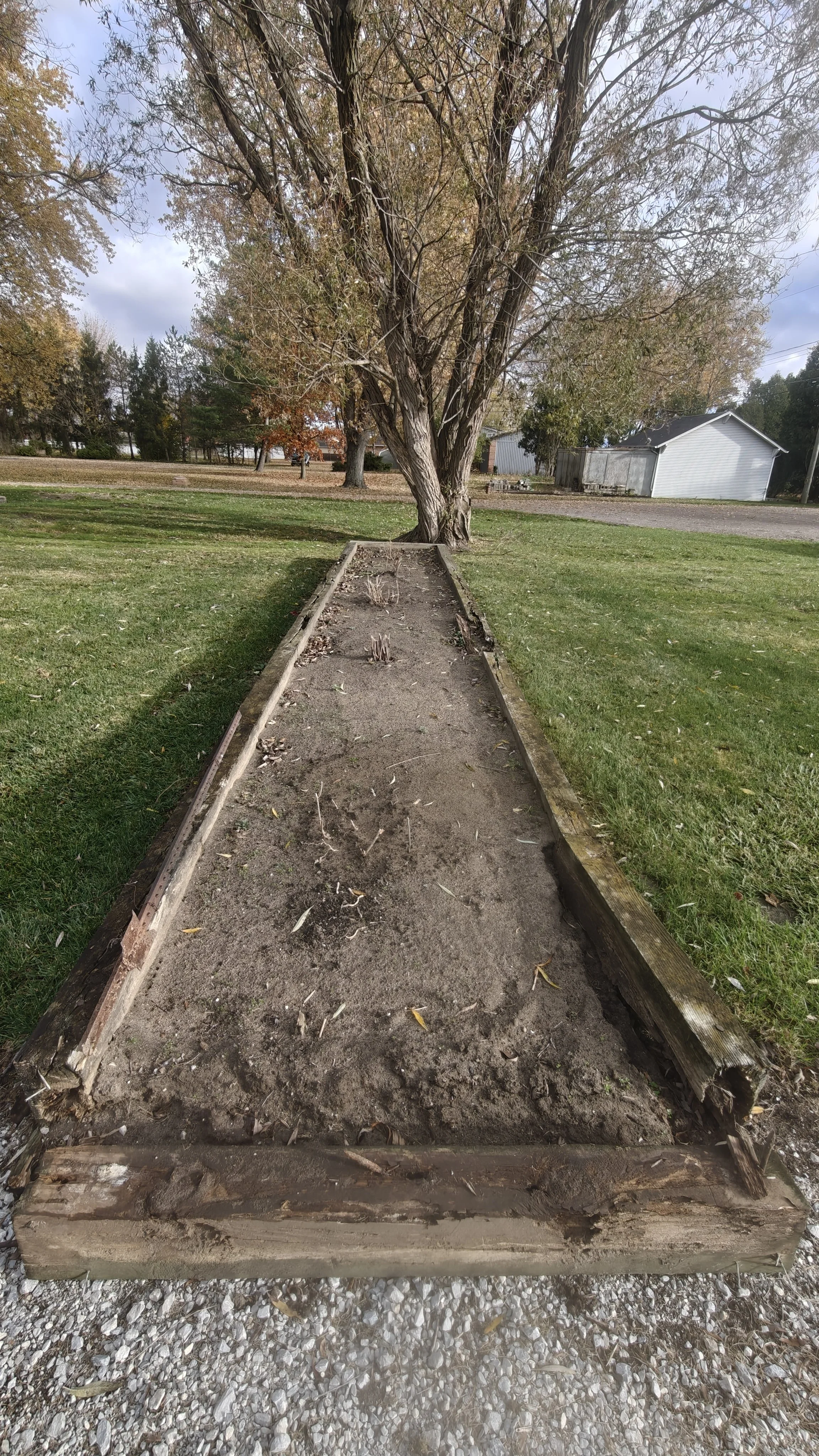
A prepared planting bed in Marine City, with its edges and remaining plant bases visible.
The return visit: collect the later leaf accumulation
The later pickup is planned around leaf drop, weather, access, and the condition of the property. It often makes sense after more of the canopy has fallen, but waiting indefinitely for the last leaf is rarely practical.
GGL’s written scope identifies the lawn areas, beds, and hard surfaces to clear, plus the debris handling included. A return for leaves does not automatically include another full round of weeding, pruning, or plant removals.
The visible result: The agreed areas are cleared of the accumulated leaves and debris covered by the visit, with serviced walks and work areas left tidy. Designated leaf-retention areas stay intact.
“Final pickup” means the last planned visit in the estimate. It does not guarantee that wind or nearby trees will leave the yard leaf-free for the rest of the season.
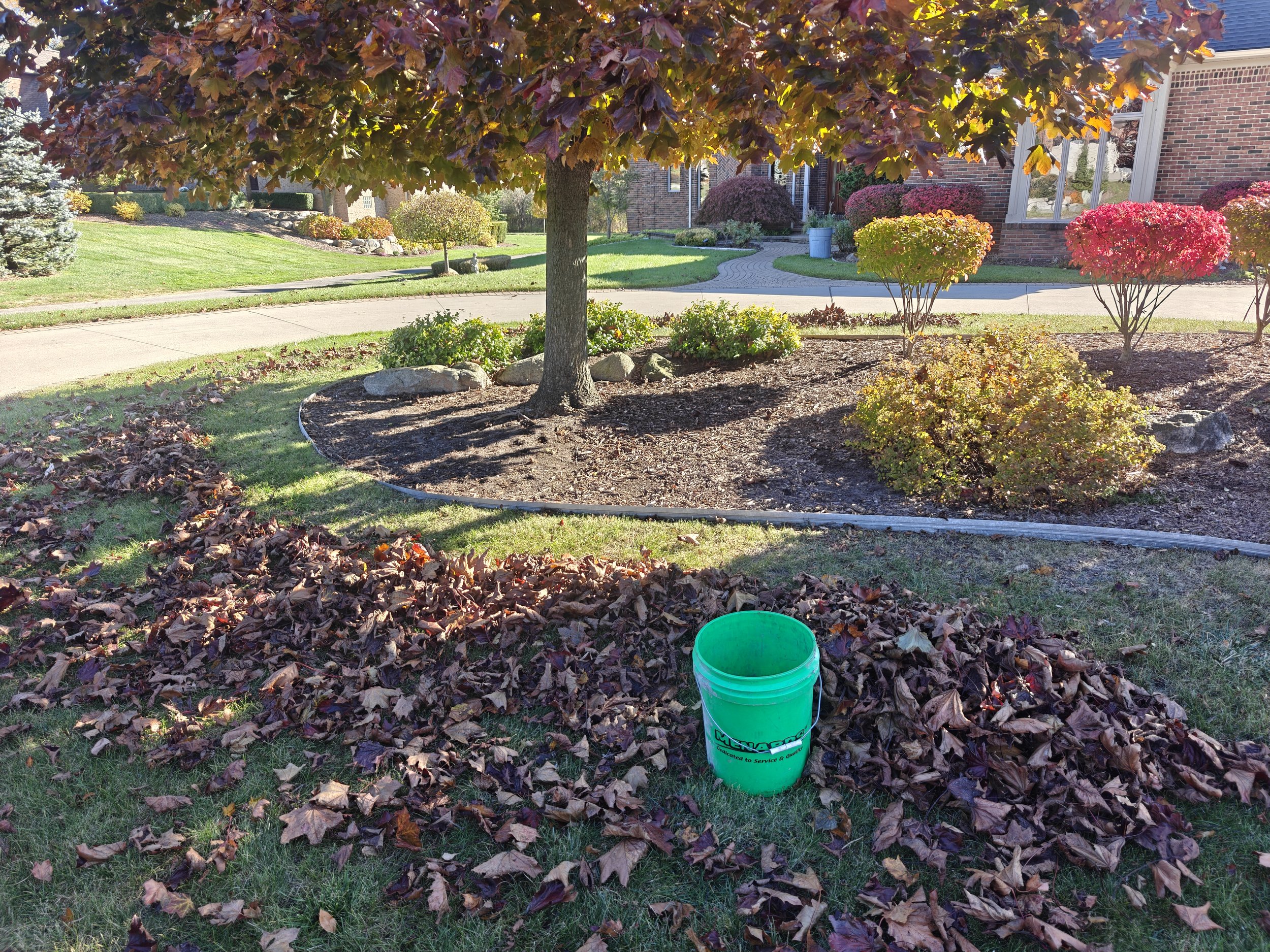
Leaves gathered beside a landscape bed in St. Clair, with collection still in progress.
Good seasonal care does not mean cutting everything back
Hydrangeas are a useful example: the right pruning time depends on the species and whether it flowers on old or new wood. Cutting the wrong stems in fall can remove next season’s flower buds. Other flowering shrubs and perennials also need individual decisions.
If a plant’s identity or pruning needs are uncertain, leave it until it can be assessed. See Michigan State University Extension’s guidance on hydrangea pruning.
Healthy leaves, stems, and seedheads can support soil, overwintering insects, and wildlife in suitable locations. A purposeful cleanup can retain selected habitat while keeping paths usable and addressing unwanted accumulation elsewhere. Diseased material needs plant-specific handling; it should not automatically be kept as mulch.
MSU Extension’s fall yard and garden cleanup guidance explains why leaving some healthy material can be valuable.
What changes the scheduling decision?
Trees and leaf load: Several species, large canopies, and leaves blowing in from surrounding properties can stretch the cleanup season.
Property size and access: More area and longer hauling routes affect the time needed for each visit.
Planting density: Leaves caught among low shrubs, perennials, and decorative stone need more detailed work than an open area.
Weather and ground conditions: Wind can refill cleared areas; rain, snow, and soft ground can change the practical service window.
Your expectations: An earlier tidy appearance may justify staged work. If you can tolerate the wait and conditions allow, one comprehensive visit may meet your needs.
Know what each visit includes before approving it
A useful estimate should name the areas being serviced, the plant work included, any material being deliberately retained, and how debris will be handled. It should also state the number of visits and the price or separate quote for a return.
You are paying for a defined scope and a visible result. If your priority is tidy foundation beds now and clear lawn areas later, say that at the start so the estimate reflects both stages.
For an example of how scope changes a quote, read our fall yard cleanup cost guide. You can also review GGL’s Landscape Cleanups service.
Can I choose just one visit?
Yes. One comprehensive cleanup can be a sensible choice when its timing, included work, and expected result match your property. Two visits should solve a specific problem, not be an automatic add-on.
Does an early cleanup make the return unnecessary?
Not necessarily. Clearing beds early does not stop leaves from falling. If a later pickup matters to you, have it included explicitly or request a separate quote.
Let’s plan the cleanup your property needs.
Gorgeous Gardens & Landscapes is a family landscaping company established in 2004. Share your property address, cleanup priorities, and optional photos so we can discuss the right scope and timing.
Request a Fall Cleanup Estimate
An estimate request does not automatically reserve a service date.
Photography: original GGL project photographs from separate properties and visits. The images illustrate the conditions described; they are not a paired before-and-after sequence.
