
Start with the plant
When a landscape starts looking tired in November, cutting everything down can seem like the quickest way to make it tidy. But a bed of dormant perennials, a flowering shrub and a patch of ornamental grass do not need the same treatment.
A good fall cleanup is selective. Identify what is growing, check its condition, and decide what should remain through winter before the cutting starts. That applies just as much to a small foundation bed in St. Clair as a larger planted property elsewhere in the county.
The quick decision
Remove: spent annuals and plant debris that needs attention because of a diagnosed disease or pest problem.
Consider leaving: healthy perennial stems, seed heads, ornamental grasses and suitable leaf cover.
Identify first: hydrangeas, other woody shrubs, and any plant whose seasonal care you are unsure about.
The photographs below are GGL project records from different properties. They illustrate bed preparation and leaf management; they are not a matched before-and-after sequence or instructions to cut every bed the same way.
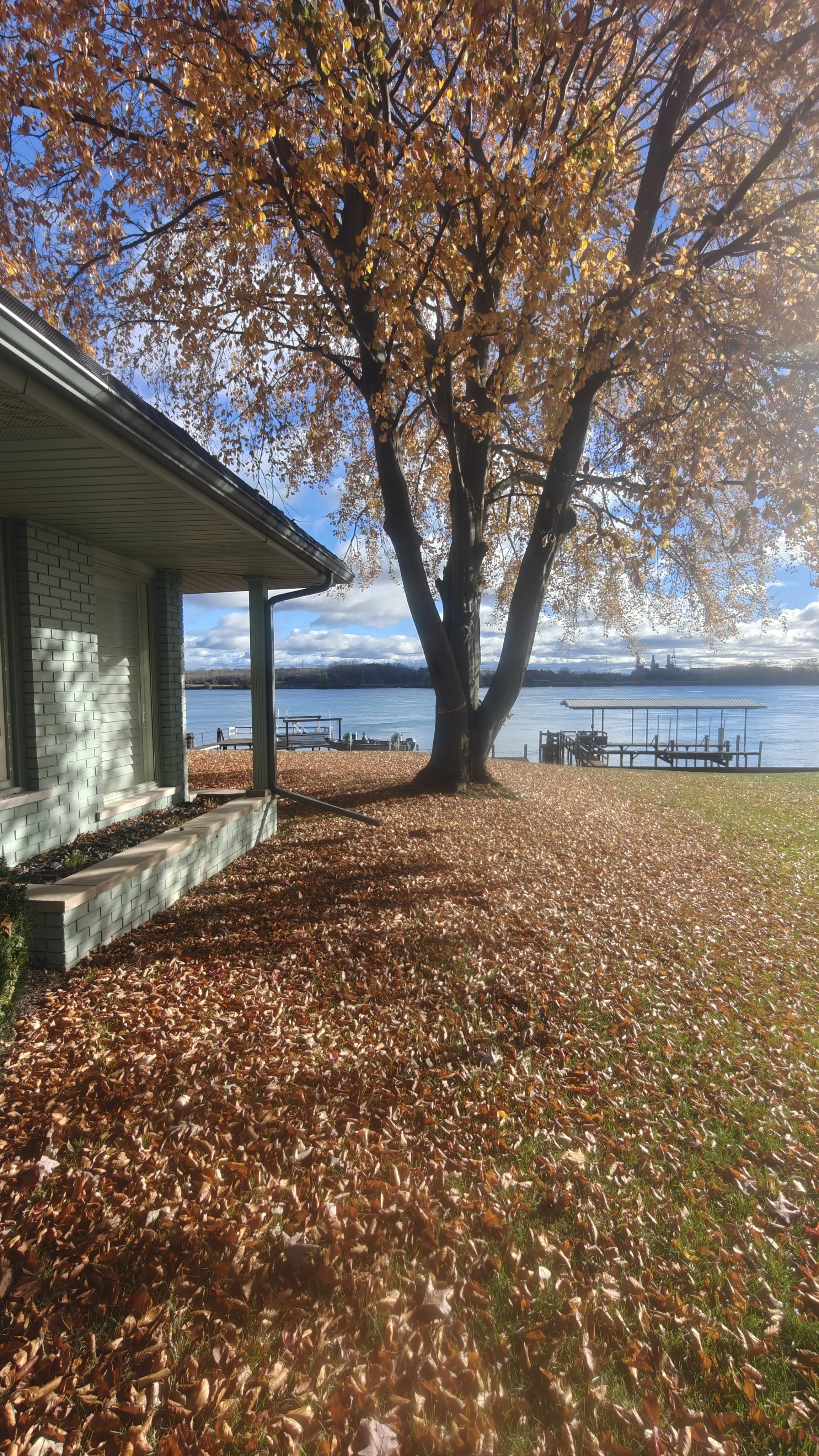
Leaves cover this East China Township lawn while the tree still holds autumn foliage. The final pickup depends on more than the calendar.
What usually deserves attention in fall?
Spent annuals can be removed from beds and containers when their display is finished. Weeds and unwanted seed heads may also need attention. Keep those decisions separate from pruning permanent plants.
Plant health can change the cleanup plan. Iowa State University Extension recommends removing affected perennial debris after natural dieback when disease or insect problems occurred during the growing season. Examples include heavily mildewed phlox or iris with borer problems. Suspect material should be identified before deciding how to handle it; ordinary browning in autumn is not, by itself, a diagnosis.
Keep diseased or pest-infested debris out of a home compost pile. See Iowa State’s fall cleanup guidance for the reasons and exceptions.
What can stay through winter?
Healthy stems, seed heads and ornamental grasses can give a winter garden structure while supporting insects and birds. Michigan State University Extension encourages leaving suitable perennial stems and grass standing and retaining some leaf habitat.
Leaves can also protect soil and provide organic matter. That does not mean leaving a dense mat over the lawn or burying every plant crown. Choose the locations deliberately and keep agreed walking routes clear. Read MSU Extension’s fall yard and garden cleanup tips.
Standing stems can be part of a cared-for landscape. A defined bed edge and a clear path help a deliberately retained planting look intentional.
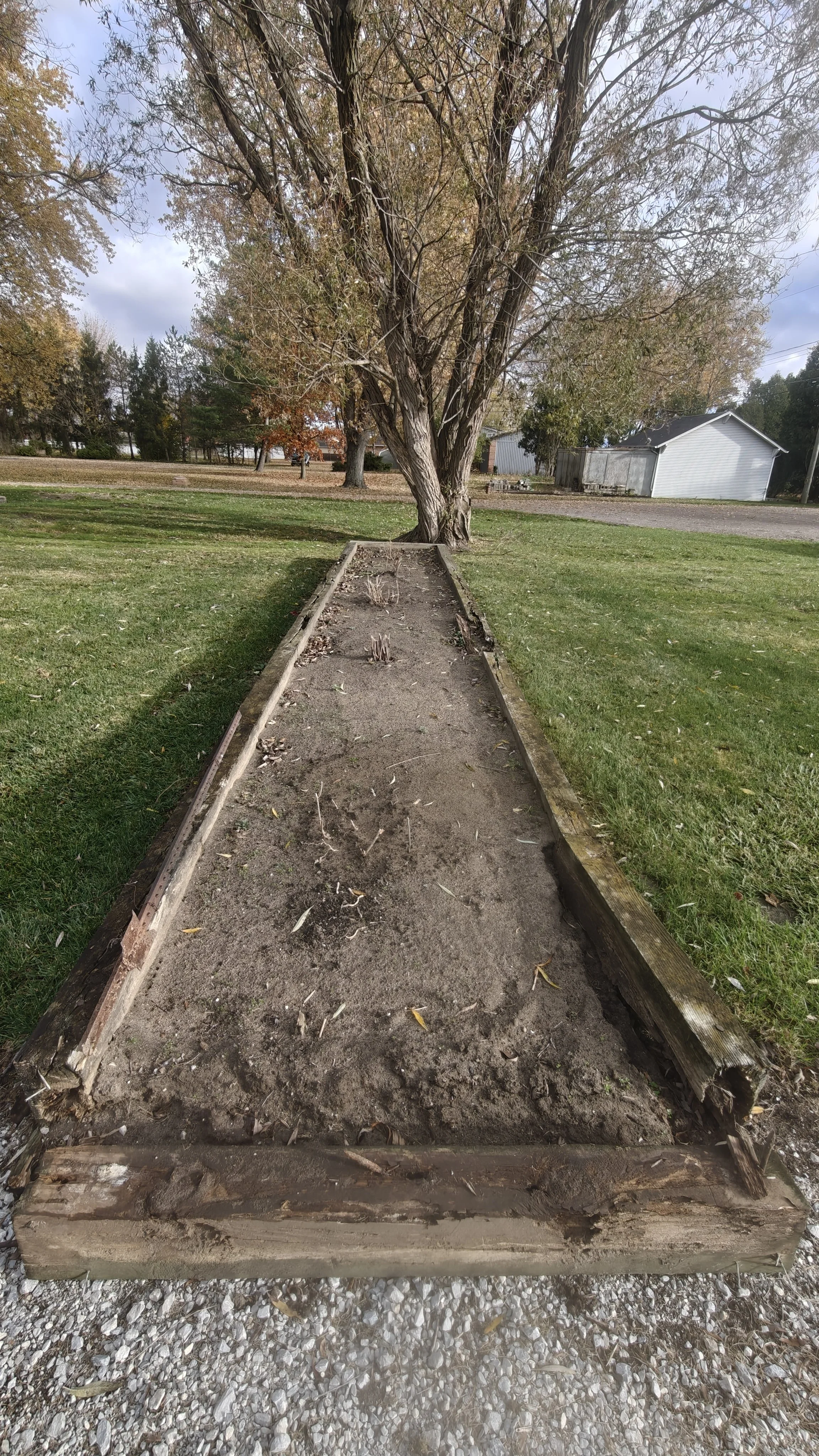
A prepared planting bed in Marine City, with its edges and remaining plant bases visible.
Hydrangeas need their own decision
Hydrangeas are woody shrubs. Treating every one like a perennial that dies back to the ground risks removing next season’s flower buds.
Bigleaf and oakleaf hydrangeas: these form flowers on older wood. Avoid a blanket fall cutback. Pruning, when needed, is generally planned after flowering.
Panicle and smooth hydrangeas: these flower on new growth. Late winter or early spring is the usual pruning window.
Unknown hydrangea: leave healthy stems until the species and cultivar are identified. A plant tag or clear photograph from the flowering season helps.
This distinction follows MSU Extension’s hydrangea pruning advice. Some cultivars rebloom, and plant condition and growth habit still matter. There is no single cutting height for every hydrangea—or every perennial.
For work beyond seasonal cutbacks, see our Trimming & Pruning service. Discuss specific plants rather than assuming all shrubs will be shaped during a leaf cleanup.
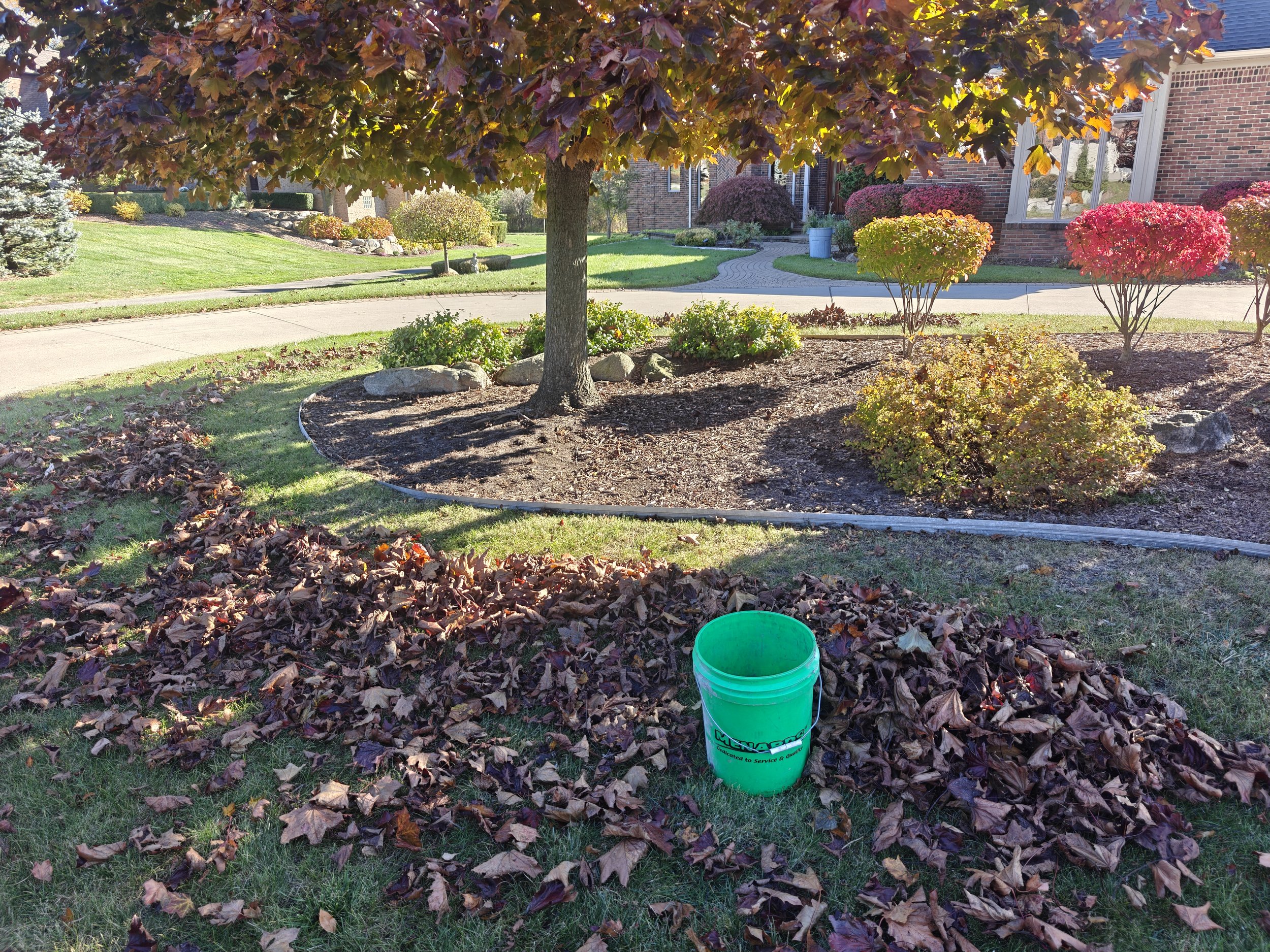
Leaves gathered beside a landscape bed in St. Clair, with collection still in progress.
Define the finished result before work begins
For a GGL Landscape Cleanup, the written estimate should identify the beds and surfaces included, agreed cutbacks, plants or habitat areas to leave, and how debris will be handled.
The result should be easy to recognize: agreed plant care completed, serviced areas tidied, debris handled as quoted, and access routes clear. Healthy growth deliberately left standing should be part of the plan, not a surprise at the end.
Cutbacks and final leaf pickup may happen at different times. Our one-visit or two-visit timing guide explains that choice. A later return visit is separately quoted unless expressly included in your written estimate, and no cleanup stops additional leaves from falling.
For a documented example of how scope affects price, read our St. Clair County fall cleanup cost guide.
Request a Fall Cleanup Estimate
Send your property address, the areas needing attention, and your priorities. Optional photos—including plant tags or summer blooms—can help explain what you want cared for and what you would like left standing.
Request a Fall Cleanup Estimate →
An estimate request does not automatically reserve a service date.
